Two years after I commented on Malaysia’s questionable defence procurement contracting, things have improved – a bit. A new government was elected partly on its anti-corruption stance, and the Royal Malaysian Air Force (RMAF) made some sensible acquisitions. But the official Malaysian Anti-Corruption Commission (MACC) recently reported that the country lost RM277 billion ($59 billion) to graft in the previous five years. It therefore seems unlikely that the defence business is yet fully rid of this depressing scourge. Very few, if any, overseas companies sell anything in Malaysia without the help of a local agent. Commissions are not revealed.
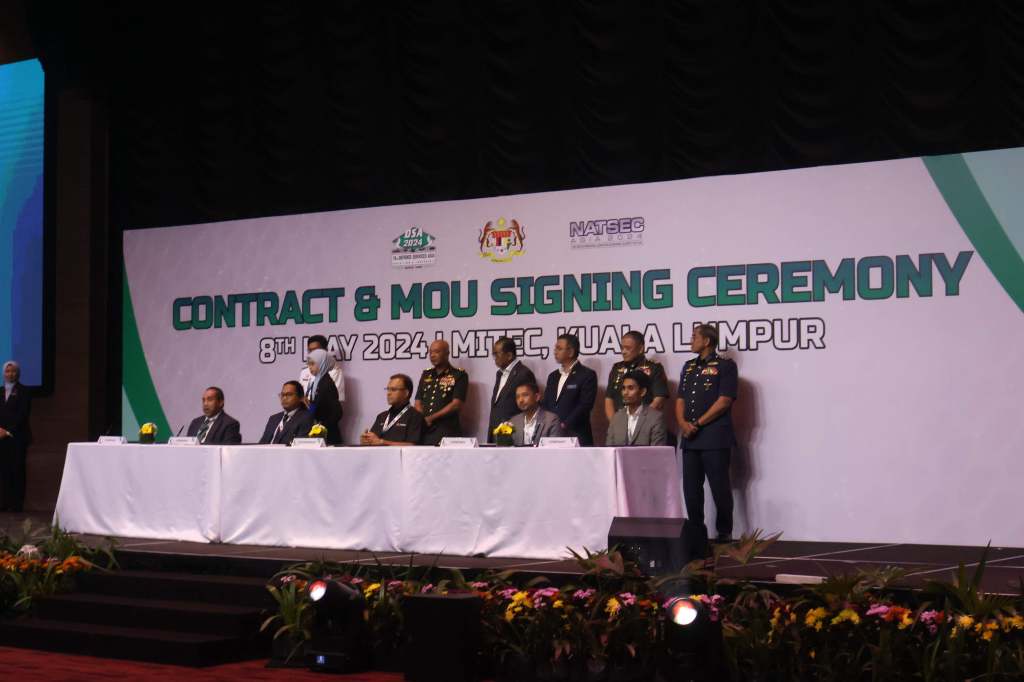
At the Defence Services Asia (DSA) and National Security Asia exhibition 6th-9th May, multiple exhibitors filled all three floors of a local exhibition centre. This show is big, and attracts top brass from many Asian countries. But the show-ending ceremonial announcement of new orders and MOUs was (as last time) long on signings but short on substance (see photo above).
I wrote some stories for Asian Military Review, which you can read amongst some other articles here. There were only a few foreign journalists attending, and most of the coverage by local scribes was short on analysis. I suggest you follow Dzirhan Mahadzir and Marhalim Abas if you want to know what’s really going on in Malaysia, defence-wise.
After a protracted and often unrealistic search for a new fighter, the RMAF chose the Korean FA-50 light jet fighter last year. A sensible choice of a quality product, that will replace ageing BAE Hawks and already-retired MiG-29s. Deliveries of 18 aircraft will begin in 2026. Kemalak Systems describes itself as the “sole local consultant” for manufacturer KAI. “Partnering with global manufacturers allows us to manage supply chain globally,” it says.
The RMAF’s squadron of 18 Sukhoi Su-30MKM fighters is still operational, thanks to India, which supplies spares that help avoid any logistics problems caused by Western sanctions against Russia. The Malaysian jets are similar to the Indian Air Force Su-30MKIs, but they do contain French and South African avionics…
The RMAF’s only other fighters are eight F/A-18D Hornets. They are now 25 years old, but have apparently worn well, since the service now proposes to spend $80 million on ten Sniper Advanced Targeting Pods. Why so many? Maybe the RMAF is still considering the acquisition of Kuwaiti F-18s, but that idea has been all talk and no action to date.
The RMAF has also made up its mind on a Medium-Altitude Long-Endurance (MALE) UAV, opting for the Turkish Aerospace Industries (TAI) Anka. As part of the deal, TAI opened an engineering and design office in Malaysia.

The RMAF has also finally signed for two Leonardo ATR-72 Maritime Patrol Aircraft (MPA) –above. They will be well-equipped with the Italian company’s sensors and mission systems, but not with any anti-ship missiles or torpedos, at least initially. Leonardo says that “there is growth potential for it to evolve into a fully-fledged Anti-Submarine Warfare (ASW) and Anti-Surface unit Warfare (AsuW) platform.” But only two of them? Malaysia has a lot of surrounding water to patrol.
One important procurement decision has been postponed: new helicopters for the RMAF and the Army. The remaining veteran Sikorsky S-61s were retired nearly five years ago. The RMAF only partially replaced them with 12 Airbus EC725s in 2011, and later leased four Leonardo AW139s via local aviation services company Westar. The Army concocted a strange deal with Aerotree, another Malaysian aviation services company, to lease four second-hand UH-60A Black Hawks for five years. Unsurprisingly perhaps, this $40 million deal has stalled in the US. Anyway, neither the Air Force nor the Army seems to have enough funding for proper procurements, with open tenders.
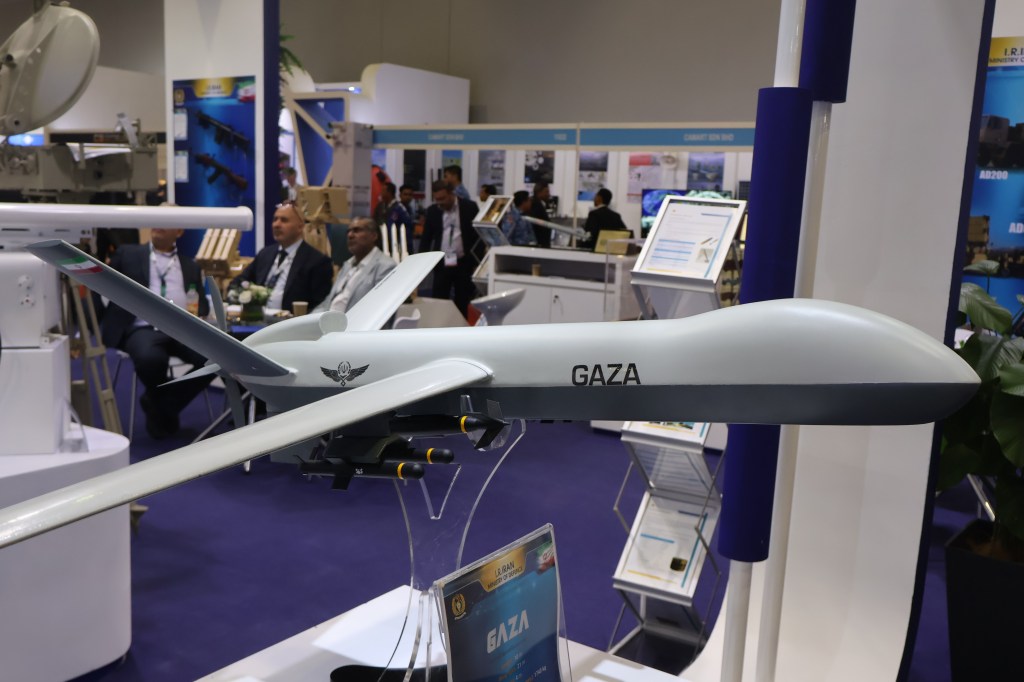
As usual these days, there were drones galore on display at DSA, big and small. Thanks to the Russia-Ukraine war, there was an increase in counter-drone systems. There were some interesting home-grown products on show, but I noticed that the four Malaysian companies who have been accused and sanctioned by the US for helping Iran’s drone production, were not exhibiting. (Iran made a rare international appearance at DSA, with some of its UAVs on display, as I reported here, including one named Gaza – below)
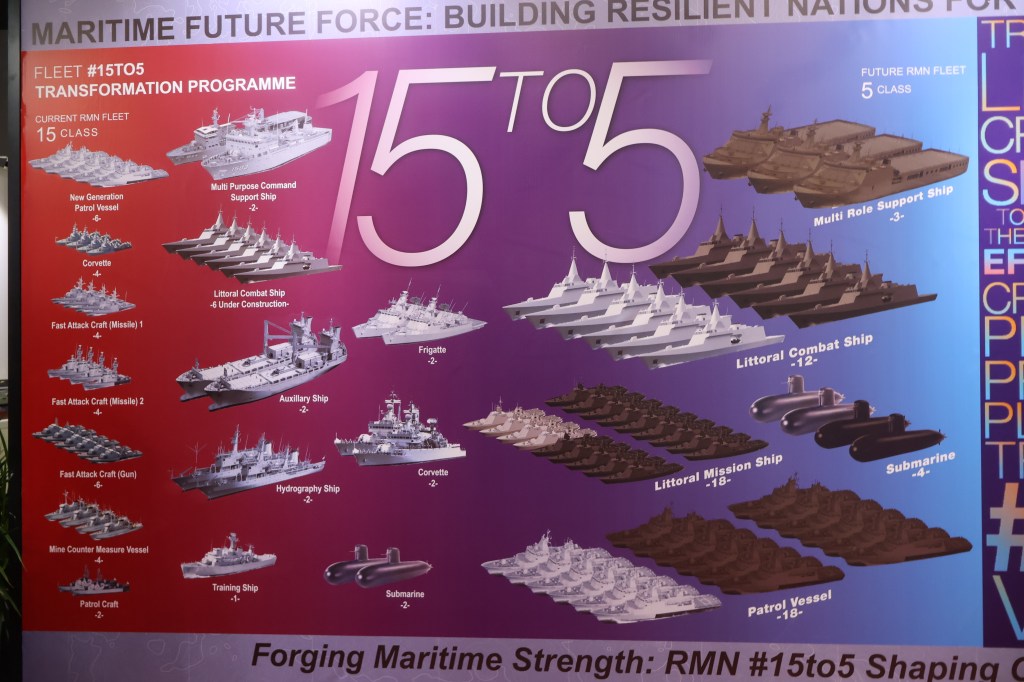
Another no-show at DSI was Boustead Heavy Industries Corporation (BHIC), the prime contractor for the Royal Malaysian Navy (RMN) Littoral Combat Ship (LCS), a stealth frigate. That programme became mired in scandal and delay, as I mentioned two years ago. The first of five vessels (reduced from the original six) is not now due to be delivered until 2026 – six years late. The government has nationalised Bousted Naval Shipyard as Lumut Naval Shipyard (which did exhibit), to get the other ships completed. Incidentally, the RMN had a fancy stand at DSA that contained large panels of graphics portraying an optimistically large future fleet inventory.(below)
The defence minister when the LCS contact was signed back in 2011 was Ahmad Zahid Hamidi. He later became leader of UNMO, which was the main governing party in Malaysia from independence all the way until its defeat in the 2018 general election. He has faced several investigations and charges for corruption. But after complicated political maneuverings and another general election, he is now a deputy prime minister in the new and supposedly reformist government.
The show was opened by its leader, Prime Minister Anwar Ibrahim. He is an impressive speaker, who should have been Malaysia’s PM many years ago. But in the 2022 election, he didn’t get enough votes from the majority Malay population, and therefore must govern by coalition with the much-reduced UMNO and other parties. So Zahid has been let-off. At least Malaysia’s chief thief, former Prime Minister Najib Razak, is now behind bars.
 Chris Pocock Makes Aerosense