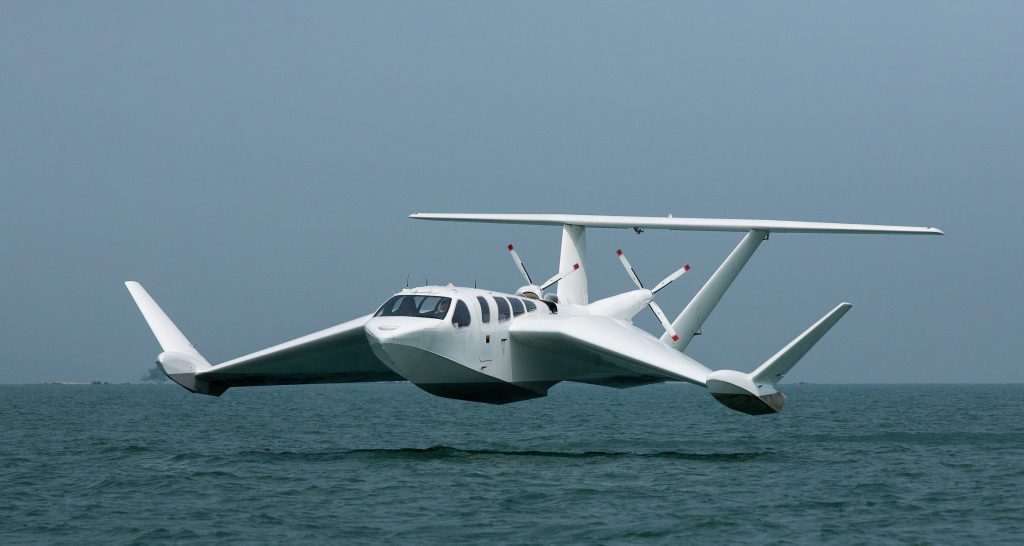
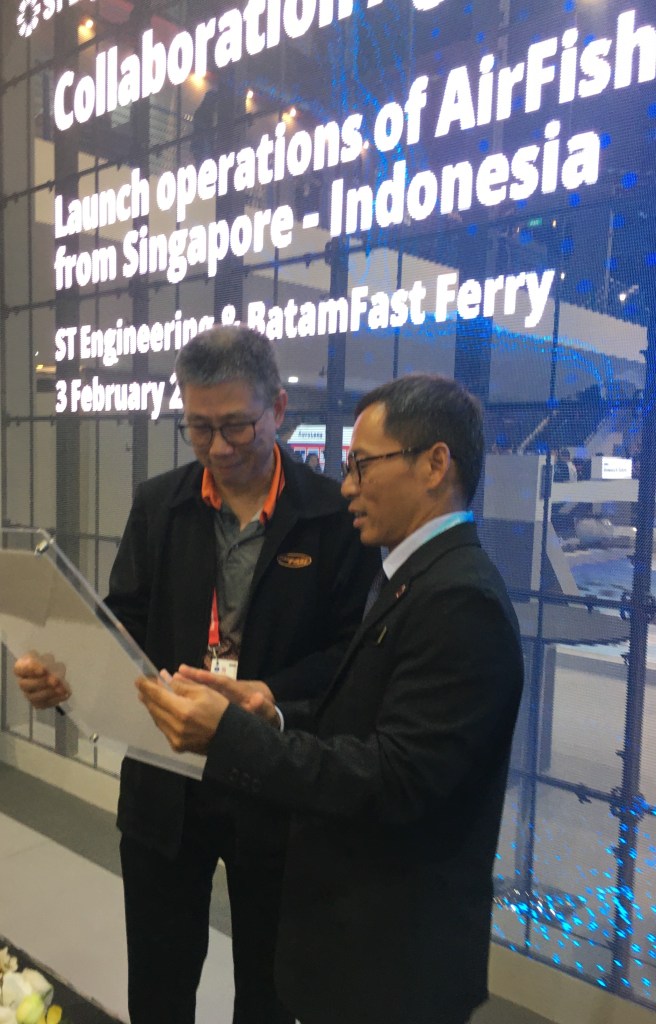
I’m glad to report progress on an unusual and innovative craft that I first wrote about two years ago for AIN Singapore Airshow News. At the 2026 Singapore show, home-grown aerospace company ST Engineering signed a lease agreement with a ferry company that will use an AirFish Wing-In-Ground Effect (WIG) vessel on services between Singapore and the nearby Indonesian island of Batam.
“Across the ocean how she glides, with grace and beauty on air she rides” are the first two lines of a poem about WIGs penned by Jeffrey Lam, ST’s president for commercial aerospace. A poem by an engineer!? Well, it certainly took some imagination for Lam and his team to bring to market, an idea with a chequered past.
WIG technology was pioneered in the mid-1960s by the Soviet Union with a huge machine powered by ten turbojets that was dubbed “The Caspian Sea Monster”. After years of trials by the Soviet Navy, it crashed in 1980.
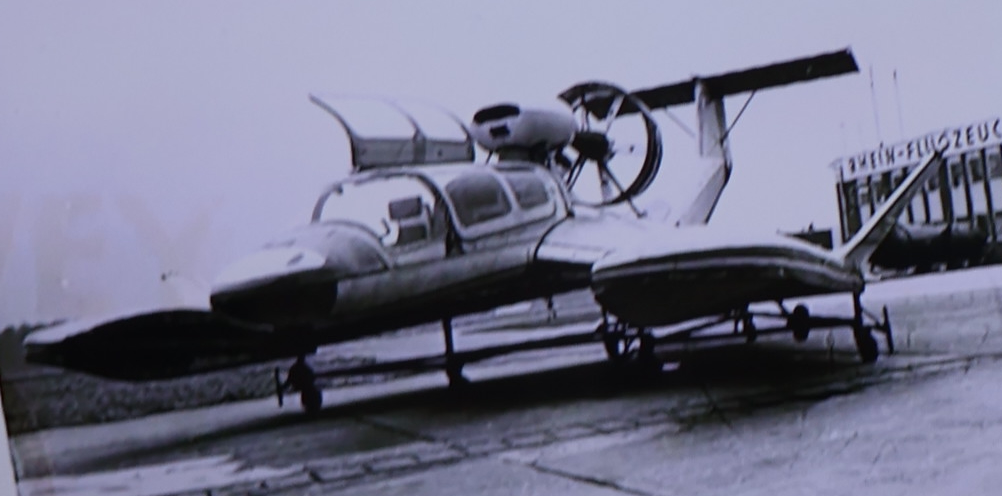
The idea was also explored by German company Airfoil Development (AFD), which built much smaller WIG prototypes in the 1970s. One was evaluated by the German military, but no orders followed. AFD stuck to the task, refined the design, and performed sea trials in 2001. But the idea foundered until 2004 when WigetWorks, a small Singapore company, bought the intellectual property rights and the two prototypes. More sea trials followed in 2007-8, this time in the Malacca Straits, but nothing more happened for ten years until this company built two more WIGs, named them AirFish, and demonstrated them to the Thai Navy. Again to no avail, and there was then a hiatus, until ST Engineering (STEngg) took interest.
Lam told me: “It wasn’t oh, we love this product, let’s jump into it. We looked at it from a very objective engineering point of view, and as a commercial opportunity.” Lam noted that seventy percent of the world is covered by water, with lots of coastal communities.
In July 2023 STEngg formed a partnership with WigetWorks named AirX. At the 2024 airshow, STEngg showed a two-seat version designated Airfish 3 and announced an LOI with a Turkish company that planned to use a larger, eight-passenger version for tourism and as private transports. That company seemingly lost interest, but now the larger version designated AirFish 8 is set to enter service with Batam Fast, which is the main company offering ferry services from Singapore to Indonesia. STEngg AirX also announced that an Indian company will lease up to four of them.
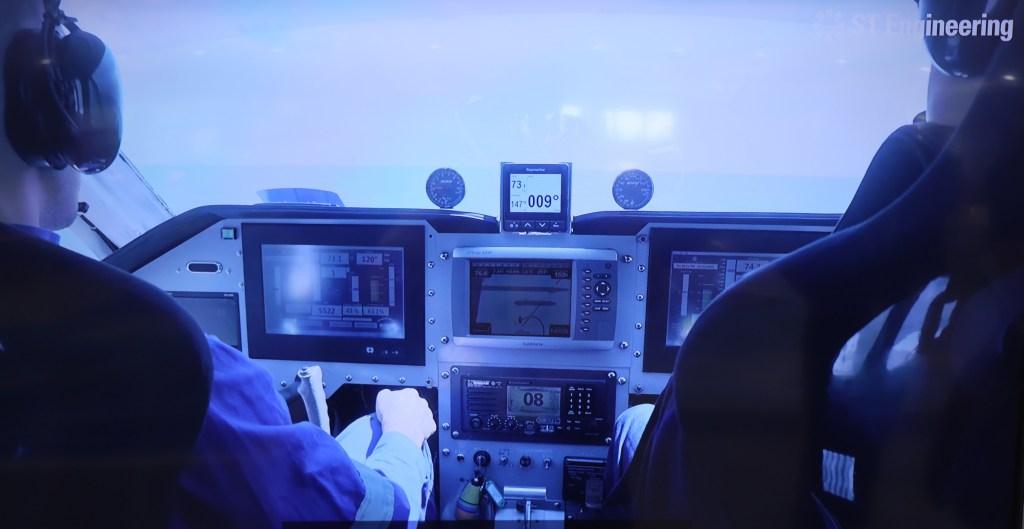
In the past two years, the partnership has refined the design. Leon Tan, the project’s vice-president and general manager, told me: “the pre-prototype had a single engine. We evolved it to a twin, to have more stability on the water. We increased the size of the control surfaces for better maneuverability, and added the safety features that are required by marine authorities, such as anti-collision avionics”. He said that a WIG is quite safe because it is stable in ground effect. The AirFish can operate in up to sea state three.
The engines are standard automotive diesels from General Motors. STEngg AirX has been working with the Bureau Veritas on the classification of the AirFish as a marine craft, and on its certification. Singapore’s Maritime Port Authority will also have to approve the first operation to Indonesia. Lam said there is still “a lot of work to be done” with the regulators, but he is optimistic that approvals will be granted by the end of the year.
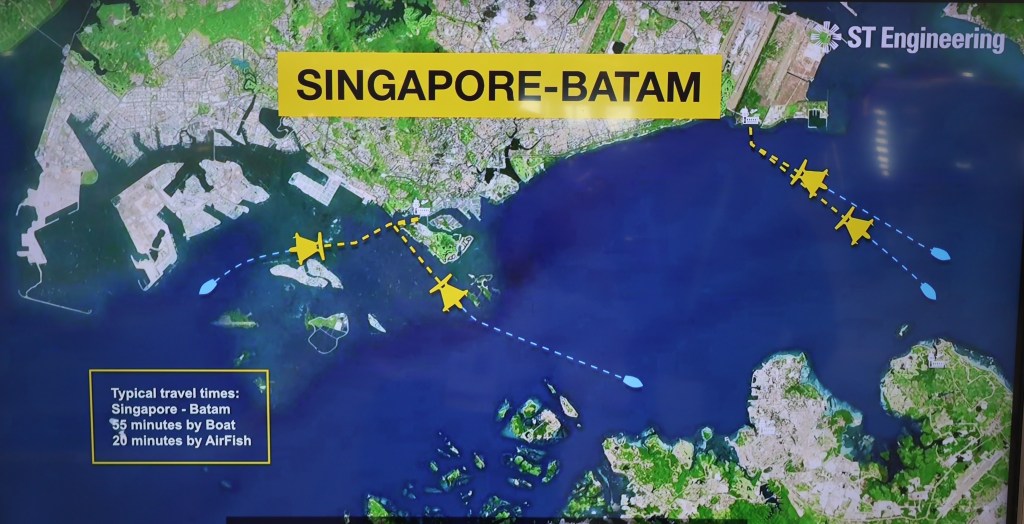
Chua Choon Leng, chief operating officer for BatamFast Ferry, said that although Batam will be the first destination, he hopes to serve more ports that are further away, such as two locations on the Indonesian island of Bintang, and Pulau Tioman, a Malaysian tourist resort. Clearly, the speed advantage of the AirFish over a conventional ferry will be best exploited on longer routes. They can travel at a maximum of 30 knots, whereas the WIG cruises at 100 knots. What will it cost to travel on the AirFish? Chua said that this could not be finalized until the capital and operational expenses are fully known. A ticket on the company’s conventional ferry to Batam costs about $40.
Of note, BatamFast Ferry is part of the Asianfast group, which also includes the marine shipyard in Batam which is building the AirFish WIGs.
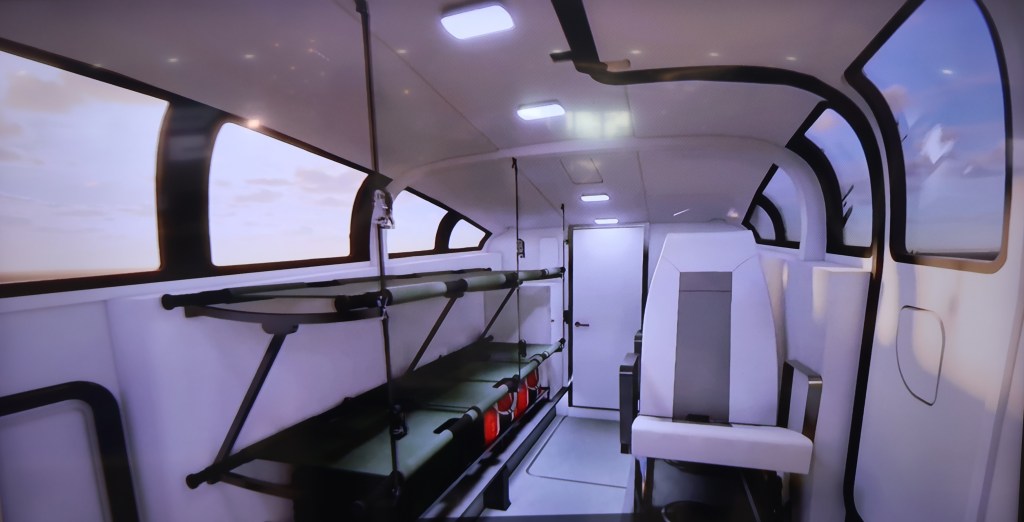
There are other potential applications for this craft such as search-and-rescue, medical evacuation, and the transport of special forces. But STEngg Air X is initially concentrating on the commercial market. The joint venture will be hoping to convert lease deals into firm sales, once the first WIGs are demonstrating successful operation. It is also exploring a larger version, more sustainable engines, and autonomous control.
The prospective Indian customer lists seven planned operating regions that have strong tourism, commuter and regional connectivity potential. Its name is Wings Over Water Ferries (WOW). The acronym seems appropriate for this ground-breaking – or should it be termed sea-breaking? – craft.
And as Jeffrey Lam writes in his poem: “Fast and Safe Her Wing-In-Ground Effect Promises, Boundless the Ocean’s Runway She Optimises.”
External Dimensions 17.3 x 15.1 x 3.5
Draft 0.55 m
Cruise Speed 100 kts
Range up to 300 NM
Operating Height up to 7m
Seating capacity 10 with two crew
Payload 1,000 kg
MTOW 5,500 kg
Engine 2 x GM LT4 V8
Propellant RON98 petrol
Takeoff/landing sea state 3
 Chris Pocock Makes Aerosense