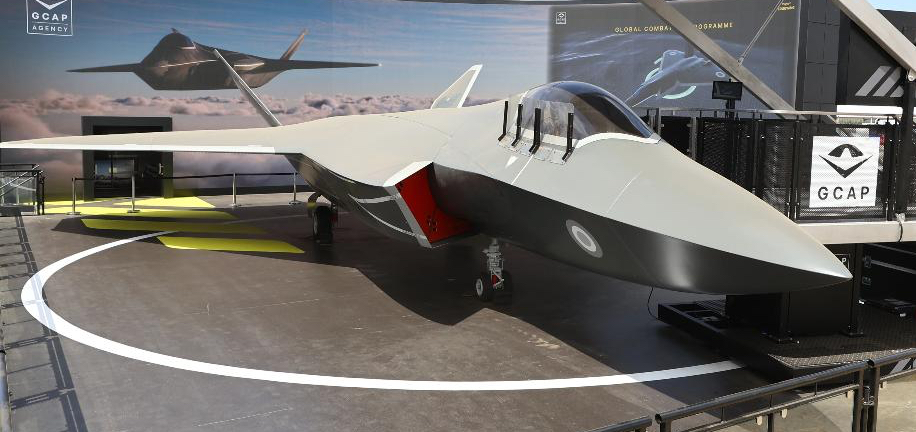
(photo courtesy AIN/David McIntosh)
Our new Prime Minister has invited Germany into the GCAP programme, and they’re thinking about it. Is this a good thing?
On the one hand, Germany could bring an infusion of funds to a very expensive programme that is hardly affordable by at least one of the partners – according to the Defence Eye website, the MoD has struggled to find its share of the £4.6 billion funding for GCAP that was announced in early July.
On the other hand, accommodating German industry when the “who-does-what” of the programme has already been agreed between the three partners (Italy and Japan being the other two) could be difficult. We’ve been told that a new organizational paradigm means that the GCAP Agency which represents the three government customers, works closely with industry, even being co-located with the GCAP head office in Reading. But evidently, this does not prevent the politicians in Whitehall from over-riding carefully-laid workshare plans. Shades of the Eurofighter development here?
Moreover, would a German entry delay the programme? GCAP ceo Marco Zoff says not, but adding a fourth partner – and Germany would not settle for less – must surely complicate the development. And GCAP tells us that this is on a tight timescale because Japan must have the jet in service in 2035. It’s worth noting that it took over eight years from first flight to initial operating capability for both the F-22 and F-35. Yet Zoff said last week that GCAP will not fly until “the beginning of the new decade”. Do the maths.
Talking of maths, there is still no public estimate of how much the overall development of GCAP will cost. The development phase of the GCAP journey was supposed to start in late 2025. This would follow the four-year “concept and assessment phase” contract worth £2 billion that the MoD awarded to “Team Tempest” led by BAE Systems in 2021, before the GCAP consortium came into being. (Italy and Japan also funded their own pre-GCAP activities.) An extension to that Team Tempest contract worth £708 million was announced in July. It seems that this extra money helps continue the funding of BAE Systems’ Combat Air Demonstrator, due to fly late next year, and Leonardo’s Excalibur avionics flying testbed.
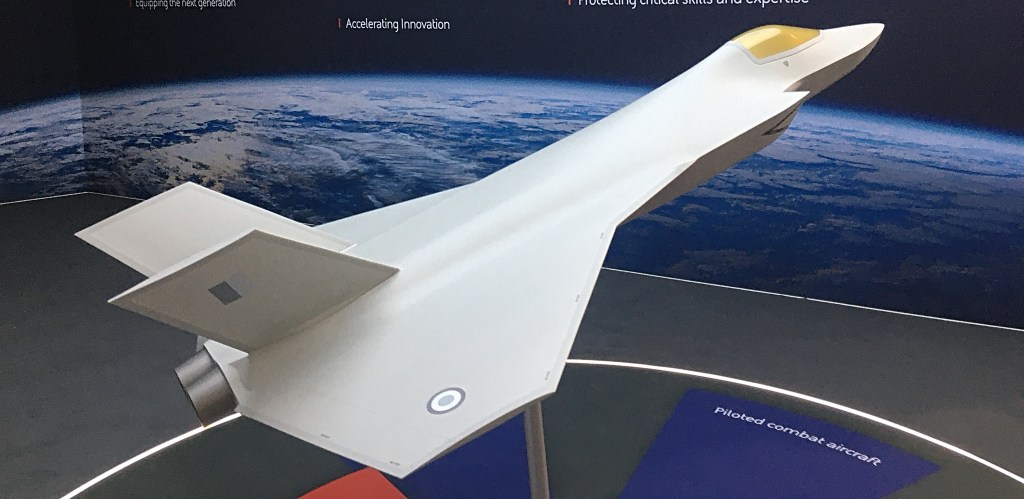
Both are billed as developing new technologies that will transition into GCAP. But intriguingly, the contract extension includes “concepting and development of critical sixth-generation sovereign combat air technologies” (our italics). Does that mean the UK is not pitching all that it knows, or will know, into GCAP? Maybe it only means that the UK will retain technology that is related to development of the wider Future Air Combat System (FCAS). Such as the RAF’s unmanned Autonomous Collaborative Platforms (ACP), notably the BAE Systems Brontanax that was unveiled at Farnborough last July. Either way, it should be noted that none of the money going into FCAS, ACPs etc is coming out of the GCAP budget.
(Incidentally, as part of the now-abandoned pan-European sixth-gen fighter programme, Germany has made important progress on ACPs and elements of an FCAS. But the GCAP programme is only funding the airframe, and how it connects with the overall FCAS.)
The terminology surrounding the GCAP project is certainly confusing. A contract worth £686 million that was awarded to the GCAP industry consortium (now named Edgewing) and announced three months behind schedule in April this year, was described as being for “design and engineering”. Internally, this is known as Task Zero.
Then came that £4.6 billion contract announced in early July for “completion of the advanced assessment phase and further joint detailed design and development” (Task One). But when Edgewing opened a new facility in Turin recently, it said that it was currently in the “advanced concept and assessment phase” – there was no mention of “development”. This phase will end at the end of next year when a “system requirements review” takes place.
Whatever, Edgewing has now received nearly £5.3 billion for two years’ work leading to a point when key elements of the design such as the outer mold line, and possibly also the required power offtake, are frozen. That leaves seven years for what could legitimately described as full-scale development, before the Japanese want rubber on the ramp. We can only do a back-of-the-envelope calculation. Another seven years’ work at (say) £5 billion per year from 2028 plus the two contracts noited above, gives a total £45 billion for pre- and full-scale development over a total of nine years.
That compares with the £3.6 billion ($4.7 billion) average annual development spend from 2027-31 requested by the US Air Force on the F-47, previously known as the Next Generation Air Dominance (NGAD) fighter. Not including the engines. The F-47 and GCAP are both sixth-generation combat aircraft, having the key characteristics of advanced low-observability and very long range. The engine development for GCAP is contained within the programme’s overall budget, hopefully. So it looks like the development costs for NGAD and GCAP are roughly similar.
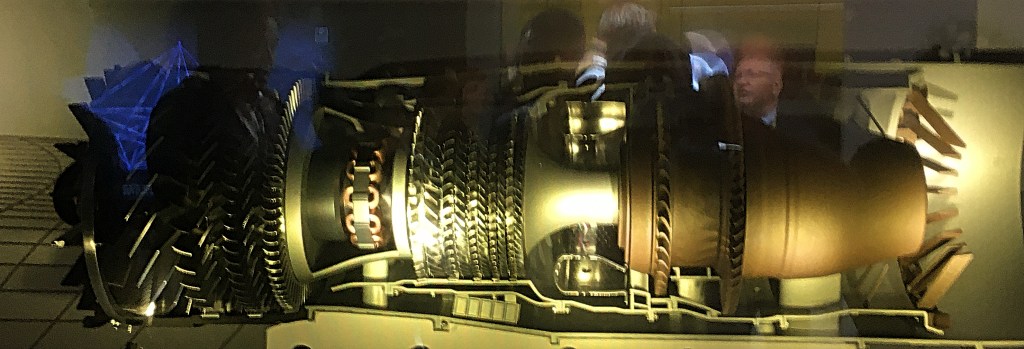
Former Secretary of the US Air Force Frank Kendall said in March 2025 that the unit cost of the NGAD would be “more than twice the price of an F-35.” So that must be at least £200 million each at current prices. We have no idea how much a production GCAP might cost. No-one is saying. Haven’t the three governments demanded at least a tentative forecast from Edgewing?
One thing is clear. The British taxpayer is entitled to greater transparency about the cost of GCAP development and production.

